
Biograpgy of Donald J. Trump Birn in 1946 is an American businessman, reality TV host, and the 45th (2017–2021) and 47th (2025–present) President of the United States — marking a historic non‑consecutive political comeback. Through The Trump Organization, he built a global real estate and branding empire, with a net worth estimated between $2.5–$3.2 billion (Forbes, 2026). As the driving force behind the MAGA movement, he reshaped the Republican Party with nationalist and populist policies. His post‑2020 career includes two impeachments (both acquitted) , a May 2024 felony conviction on 34 counts (under appeal), and multiple ongoing legal battles. Re‑elected in 2024, his second term (2025–2029) continues to spark debate over his lasting presidential legacy on the courts, economy, and democratic norms.
Donald Trump : America’s Most Controversial Political Comeback
Few political figures in modern history have divided public opinion as sharply as . Loved by supporters, criticized by opponents, and constantly dominating headlines, Trump transformed American politics in ways that continue to shape the country today.
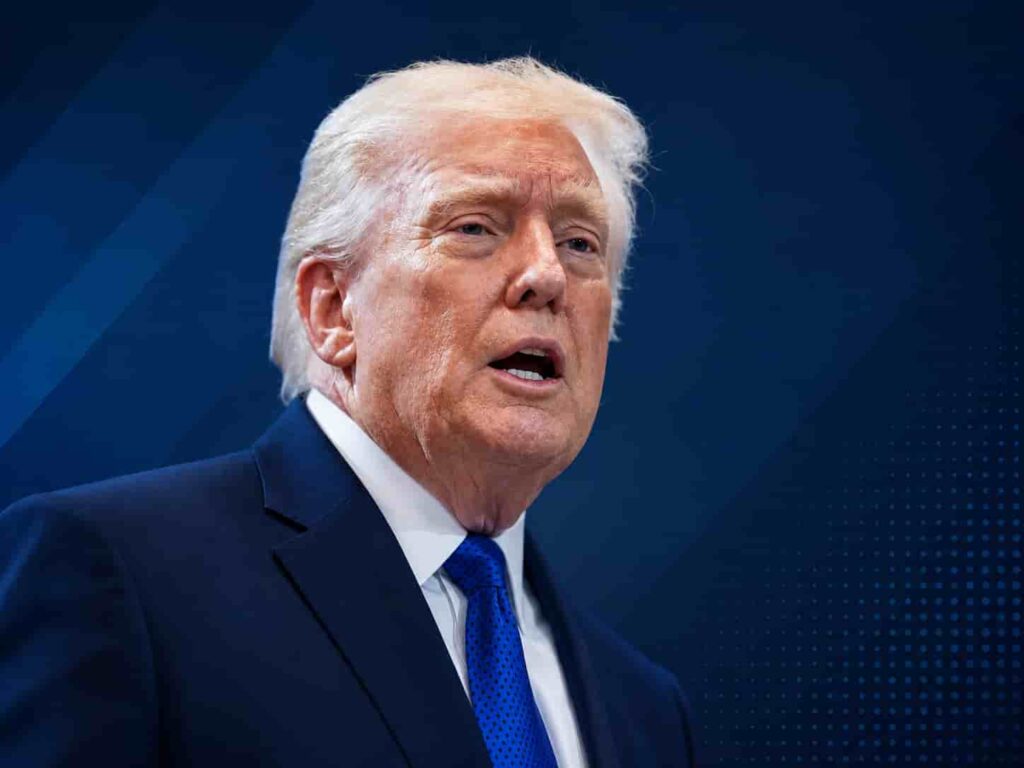
From building luxury skyscrapers in New York City to hosting one of television’s biggest reality shows and later returning to the White House after losing reelection, Trump’s journey has been filled with controversy, legal battles, media attention, and political reinvention.
He is only the second president in U.S. history after to serve two non-consecutive presidential terms.
Early Life and Education
Donald John Trump was born on June 14, 1946, in Queens, New York City. He was the fourth of five children born to Fred Trump, a successful real estate developer, and Mary Anne MacLeod Trump.
Trump spent part of his teenage years at the New York Military Academy, where he was known for discipline and competitiveness. He later attended Fordham University before transferring to the Wharton School of the University of Pennsylvania, one of America’s top business schools.
In 1968, he graduated with a degree in economics and officially joined his father’s real estate business.
During the Vietnam War era, Trump received several draft deferments, including a medical exemption related to bone spurs.
Entering the Real Estate Business
Trump initially worked within his father’s outer-borough housing business before shifting focus toward Manhattan luxury real estate.
His major breakthrough came in 1980 with the redevelopment of the Commodore Hotel into the Grand Hyatt Hotel. The project helped establish Trump as a rising figure in New York’s real estate scene.
Throughout the 1980s, he expanded aggressively with projects including:
- Trump Tower in Manhattan
- Trump Plaza
- Trump Parc
- The Plaza Hotel
- Atlantic City casino developments
The gold-branded “Trump” identity became a global luxury symbol during this period.
In 1985, Trump acquired , the Florida estate that would later become his primary residence and a major political center during and after his presidency.
Business Expansion and Financial Struggles
By the late 1980s, Trump had expanded into casinos, airlines, sports, and luxury branding. However, rapid borrowing and the economic slowdown of the early 1990s created major financial pressure.
Several Trump-linked casino businesses entered bankruptcy restructurings during the 1990s, including the Trump Taj Mahal and other Atlantic City properties.
Although Trump personally avoided complete financial collapse, reports at the time suggested his businesses carried billions of dollars in debt.
The crisis forced him to restructure assets, negotiate with lenders, and rebuild his public image.
Media Fame and ‘The Apprentice’
Trump’s national popularity grew again in 2004 with the launch of the television show .
The program presented Trump as a decisive billionaire businessman evaluating contestants for corporate success. His phrase “You’re fired!” became one of the most recognizable catchphrases in television history.
The show significantly boosted Trump’s celebrity status and helped transform him from a real estate developer into a mainstream media personality.
During this period, the Trump brand expanded into:
- Hotels
- Golf resorts
- Books
- Fragrances
- Licensing deals
- Merchandise
Trump also launched Trump University, which later became the subject of fraud lawsuits that were settled in 2016 without an admission of wrongdoing.
Trump’s Golf Empire
Trump invested heavily in golf properties across the United States and internationally. His portfolio eventually included luxury golf resorts in:
- Florida
- New Jersey
- Scotland
- Ireland
Golf publications and sports business analysts frequently described Trump as one of the most influential modern developers in the golf industry.
Personal Life and Family
Trump has been married three times.
Ivana Trump (1977–1992)
His first marriage to produced three children:
- Donald Trump Jr.
- Ivanka Trump
- Eric Trump
Marla Maples (1993–1999)
Trump later married actress . They had one daughter:
- Tiffany Trump
Melania Trump (2005–Present)
In 2005, Trump married , originally from Slovenia. Their son Barron Trump was born in 2006.
Melania became the second foreign-born First Lady in American history.
Entering Politics
Although Trump had publicly discussed politics for decades, he formally entered the 2016 presidential race on June 16, 2015.
Announcing his campaign at Trump Tower in New York, he adopted the slogan:
Make America Great Again (MAGA)
The slogan soon became the centerpiece of a populist political movement focused on:
- Nationalism
- Immigration restrictions
- Trade protectionism
- Anti-establishment politics
- “America First” policies
Trump defeated in the 2016 election, winning the Electoral College despite losing the national popular vote.
First Presidential Term (2017–2021)
Trump was inaugurated as the 45th president of the United States on January 20, 2017.
Major actions during his first term included:
- Tax Cuts and Jobs Act (2017)
- Appointment of three Supreme Court justices
- Withdrawal from the Paris Climate Agreement
- Renegotiation of trade agreements
- Hardline immigration policies
- Launch of Operation Warp Speed during the COVID-19 pandemic
- Relocation of the U.S. embassy in Israel to Jerusalem
His presidency was marked by intense political polarization and constant media attention.
Impeachments and the 2020 Election
Trump became the first U.S. president to be impeached twice.
First Impeachment (2019)
The House of Representatives impeached Trump over allegations connected to Ukraine and abuse of power. The Senate later acquitted him.
Second Impeachment (2021)
Following the January 6 Capitol riot, the House impeached Trump for incitement of insurrection. The Senate again acquitted him.
Trump lost the 2020 presidential election to .
After the election, Trump repeatedly challenged the results and alleged widespread voter fraud. Multiple courts, election officials, and investigations found no evidence sufficient to overturn the election outcome.
Legal Challenges and Criminal Cases
After leaving office, Trump faced several criminal and civil investigations.
The cases included:
- Classified documents investigation
- 2020 election interference allegations
- Business records case in New York
In May 2024, a New York jury found Trump guilty on 34 felony counts related to falsifying business records, making him the first former U.S. president convicted in a criminal case.
Trump denied wrongdoing and appealed the verdict.
The legal proceedings remain one of the most debated aspects of modern American politics.
The 2024 Election and Historic Return
In the 2024 presidential election, Trump defeated and returned to the White House as the 47th president.
His political comeback was widely described by analysts as one of the most remarkable returns in American electoral history.
The victory demonstrated the continued strength of the MAGA movement inside the Republican Party and among millions of voters nationwide.
Trump’s Second Presidential Term (2025–Present)
Since returning to office in 2025, Trump’s administration has focused on:
- Immigration enforcement
- Tariff-based trade policies
- Federal bureaucracy reforms
- Border security
- Executive authority expansion
- Energy production initiatives
His second term has also featured renewed debates over:
- International trade
- NATO funding
- Relations with China
- Federal agency power
- Immigration policy
Supporters argue Trump is restoring economic nationalism and strengthening executive leadership.
Critics argue his policies continue to deepen political divisions and challenge democratic norms.
Trump’s Legacy and Global Impact
Donald Trump remains one of the most influential and controversial political figures of the 21st century.
Supporters credit him with:
- Reshaping the Republican Party
- Challenging traditional political elites
- Strengthening conservative judicial influence
- Prioritizing “America First” policies
Critics accuse him of:
- Intensifying political polarization
- Undermining democratic traditions
- Spreading misinformation about elections
- Contributing to institutional distrust
Regardless of perspective, Trump’s impact on American politics, media, and global political movements is undeniable.
The MAGA movement continues to influence elections, conservative politics, and public debate across the United States.
Key Timeline
| Year | Event |
|---|---|
| 1946 | Born in Queens, New York |
| 1968 | Graduates from Wharton School |
| 1980 | Opens Grand Hyatt Hotel |
| 1983 | Opens Trump Tower |
| 1990s | Casino and debt crisis |
| 2004 | Launches The Apprentice |
| 2015 | Announces presidential campaign |
| 2017 | Becomes 45th president |
| 2019 | First impeachment |
| 2021 | Leaves office after election defeat |
| 2024 | Convicted in New York business records case |
| 2024 | Wins presidential election |
| 2025 | Becomes 47th president |
FAQ :
Donald Trump · Fact overview
Donald Trump’s story is unlike that of any modern American president.
Businessman, television celebrity, political outsider, twice-impeached president, criminal defendant, and historic comeback winner — Trump has repeatedly defied political expectations.
Whether viewed as a transformational leader or a deeply divisive figure, his influence on American politics will likely be studied for decades.