
Europe is warming 2x faster than the global average. Data reveals record heatwaves, droughts, and wildfires. Discover urgent adaptation strategies cities like Barcelona & Copenhagen are using. Read our expert analysis.
Key Takeaways:
Accelerated Warming: Europe is heating up twice as fast as the global average, making extreme weather the new normal.
Tangible Impacts: Record-breaking heatwaves, catastrophic wildfires, and severe droughts are already crippling economies, agriculture, and public health.
Adaptation is Now: The focus has shifted from solely preventing climate change to urgently adapting to its unavoidable effects.
Solutions Exist: Cities like Barcelona and Copenhagen are leading the way with innovative strategies like “superblocks” and cloudburst management.
Systemic Action Needed: Success requires a trinity of robust policy, significant investment, and empowered local communities.
Europe’s Burning Reality: Heatwaves, Wildfires, and the Urgent Need for Adaptation
Sub-headline: A Continent Forcibly Recasting Its Identity in the Face of Unprecedented Climate Shifts
Published on: October 26, 2023
Introduction: The Shattered Illusion
For centuries, the European identity has been intertwined with a temperate, predictable climate. This perception is now a relic.
According to the World Meteorological Organization (2023), Europe is warming at twice the global average rate. The continent is being decisively transformed from a zone of stability into a hotspot for devastating extremes.
The events of recent summers are not mere anomalies. They are a preview of a challenging new era.
As Dr. Elena Rossi, a Climate Scientist at ETH Zurich, states: The data is clear. We are operating on a new baseline, and our strategies must reflect this permanent shift.
This article provides a data-driven analysis of Europe’s new climate reality and explores the innovative, and often urgent, adaptation strategies being deployed from the municipal to the transnational level.
Europe’s New Climate Normal – Anatomy of a Heating Continent
Megadroughts and Water Scarcity
The 2022 drought crisis was a stark warning, exposing deep vulnerabilities across the continent:
● Agricultural Collapse: Crop yields plummeted by 30-50% in southern Europe (EU Joint Research Centre, 2022).
● Energy Crisis Compounded: French nuclear power output fell to 30-year lows due to a lack of cooling water.
● River Transport Crippled: Critical shipping on the Rhine River halted as water levels dropped below navigable thresholds.
Heatwaves: From Anomaly to Annual Expectation
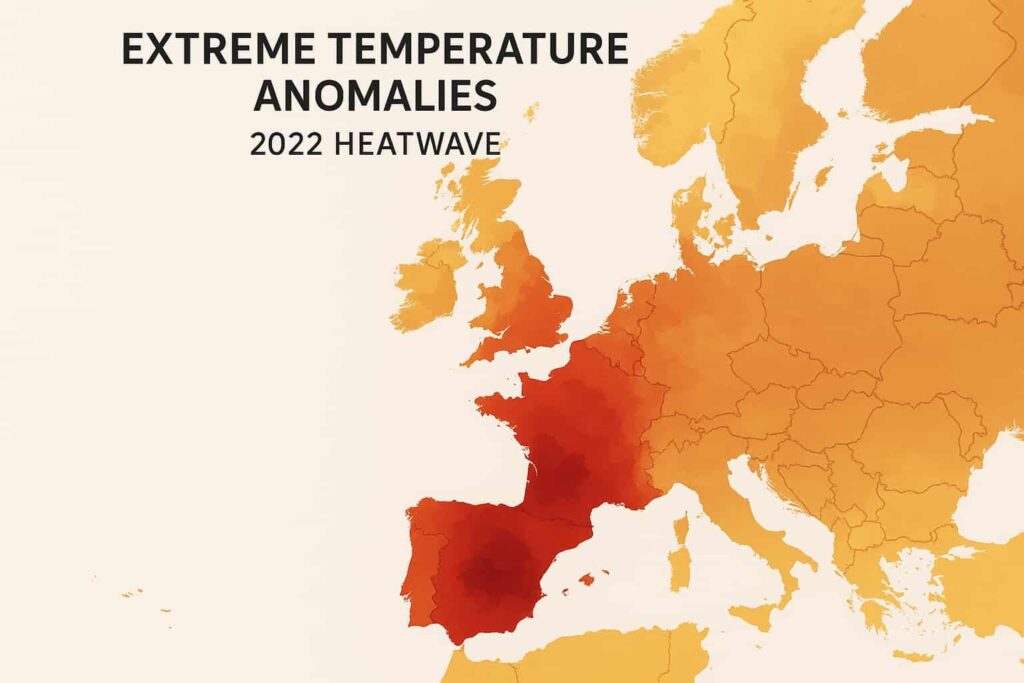
The summer of 2022 shattered long-standing records, signaling a permanent shift. Urban heat islands amplified the danger, making cities 10-15°C hotter than surrounding rural areas.
Table: Deadliest European Heatwaves of the 21st Century
Year Excess Deaths Countries Most Affected Key Impact & Lesson
2003 -70,000+ France, Italy, Germany Led to the creation of national heatwave health alert systems across Europe.
2018 20,000+ Northern Europe Highlighted vulnerability in regions historically unprepared for extreme heat.
2022 15,000+ (est.) UK, Spain, Portugal Demonstrated that current infrastructure is inadequate for this new climate reality.
Wildfires: Unleashing an Uncontrollable Force
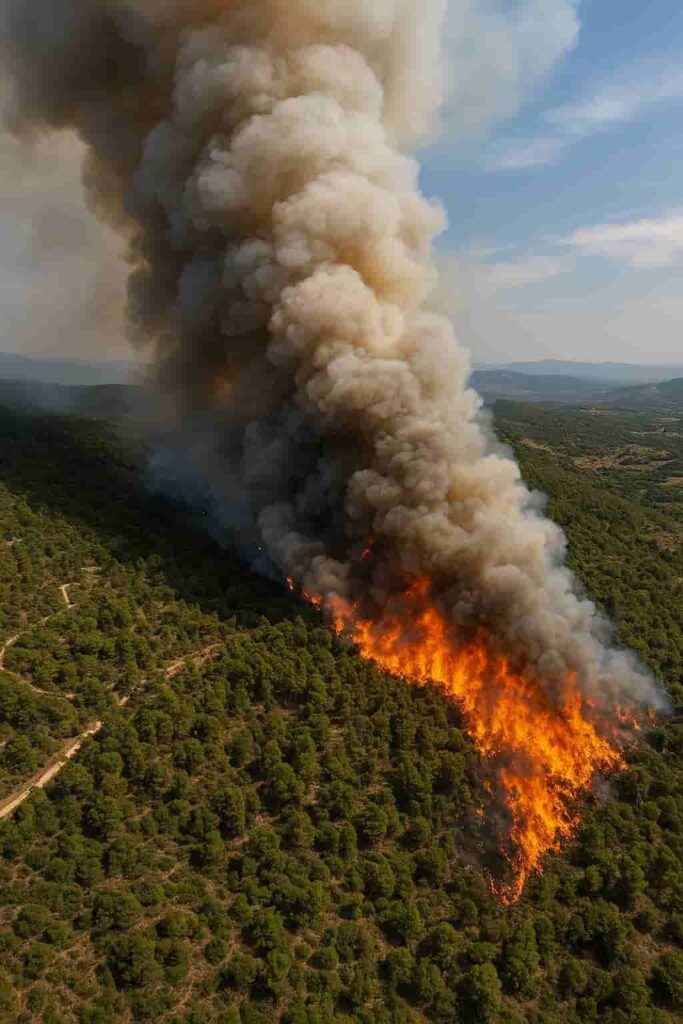
Source: EFFIS – European Forest Fire Information System
Key 2022 Statistics:
● 785,000 hectares burned across EU countries.
● The fire season is now 2-3 months longer than the historical average.
● Previously unaffected countries like Sweden and Germany experienced unprecedented fire activity.
The Adaptation Imperative – From Reactive to Proactive
Rethinking Urban Landscapes: Case Studies
● Barcelona’s “Superblocks” Program
Strategy: Converting car-dominated streets into green, pedestrian-friendly public spaces.
● Scale: Target of 503 superblocks by 2030.
● Result: Air temperatures reduced by 2-3°C in pilot areas.
● Key Insight: This model demonstrates that reclaiming urban space from cars is a highly effective urban heat island solution, though it requires significant political will.
● Copenhagen’s Cloudburst Management
● Investment: $1.7 billion in innovative green and blue infrastructure.
● Design: An integrated system of parks, tunnels, and surface channels designed to handle 100-year rainfall events.
● Key Insight: Proactive, large-scale investment in resilient infrastructure is far cheaper than rebuilding after a catastrophe.
Water Management Revolution
Successful climate adaptation strategies for water include:
● Israel: Achieves 90% wastewater recycling for agricultural use.
● Singapore: NEWater provides 40% of national water needs through advanced purification.
● Spain: Modernizing traditional irrigation systems could save up to 30% of water usage.
Forest Management for Fire Resilience
Evidence-based strategies are being implemented:
● Portugal: After the devastating 2017 fires, implemented a nationwide fuel management program to create firebreaks.
● Germany: Actively converting vulnerable monoculture spruce forests into resilient mixed-species woodlands.
● Greece: Enhanced early warning systems have reduced fire response times to under 15 minutes.
The Path Forward – Systemic Integration
3.1 Governance Framework
The EU Adaptation Strategy is built on three key pillars:
1. Smarter Adaptation: Improving data collection and climate risk assessment tools.
2. Faster Adaptation: Accelerating the rollout of proven solutions.
3. More Systemic Adaptation: Mainstreaming climate resilience into all policy areas.
Success hinges on translating high-level strategy into actionable, funded projects at the local level.
The Adaptation Trinity: What Needs to Happen Now
1.Policy: Mandatory climate-proofing for all new public infrastructure projects.
2. Investment: Redirecting subsidies towards resilience and a circular water economy.
3. Community: Empowering local-level awareness and citizen action groups for disaster preparedness.
Financial Mechanisms
The scale of investment required is vast, but the return is compelling:
● €100+ billion needed annually for climate adaptation across the bloc.
● l Every €1 spent on prevention can save up to €10 in future disaster response costs.
Frequently Asked Questions (FAQ)
Q1: Which European countries are most at risk from climate change?
A:Southern European countries (Spain, Portugal, Italy, Greece) face the greatest threats from heatwaves, droughts, and wildfires. However, Northern European countries are also increasingly vulnerable to flooding and are unprepared for extreme heat, as seen in the UK in 2022.
Q2: What is the difference between climate mitigation and adaptation?
A:Mitigation focuses on reducing greenhouse gas emissions to stop the problem from getting worse (e.g., switching to renewable energy). Adaptation involves adjusting to the current and future impacts of climate change that are already unavoidable (e.g., building flood defenses or developing drought-resistant crops). Both are now essential.
Q3: How can individuals protect themselves during a heatwave?
A:Key steps include: staying hydrated, avoiding strenuous activity during the hottest part of the day, keeping your living space cool (using shades or fans), checking on vulnerable neighbors, and following official heatwave protection plans from local authorities.
Q4: Are European governments doing enough to adapt?
A:While the EU has a strong policy framework and some cities are leading the way, most experts agree that the pace and scale of implementation are insufficient. The EU climate adaptation fund and national strategies need to be backed by faster, more funded, and more widespread action to match the accelerating risks.
Conclusion: The Indispensable Decade of Action
Europe stands at a critical juncture. The debate is over; the era of adaptation is here.
The choice is no longer if we adapt, but how fast and how wisely we can build resilience. The pioneering work in cities like Barcelona and Copenhagen provides a blueprint, but it must be scaled with unprecedented speed and political commitment.
The conversation must now move from boardrooms to town halls. Will your city be the next leader in resilience, or will it be caught unprepared?
As the EU Climate Commissioner has stated, Adaptation is not about surrender; it’s about smart resilience. Every euro spent today saves ten euros in future disaster response.
This effort cannot be top-down alone. The indispensable decade requires informed citizens demanding action. Share this analysis, support climate-smart businesses, and advocate for resilience in your own community. Our collective future depends on the steps we take now.
About the Author
This analysis was compiled by the editorial team at EasyKnowledgeable Team, drawing on data from leading climate institutions and scientific reports to provide actionable insights on pressing environmental challenges. Our mission is to translate complex science into clear, impactful information.